Showing posts with label Table Strategies. Show all posts

Get Started with Easy Meal Planning to Save Time and Money

New over on Associated Content:

If a tight budget is starting to squeeze your food spending, it may be time to consider a strategy that can save you money and help you maintain a healthy diet: meal planning.

Meal planning is as simple as working out at the beginning of the week what you will serve for dinner each night for the rest of the week. You can then use your plans to formulate a grocery list, helping ensure you buy only what you need when you shop. Plus, if you know what you're planning to cook and have the supplies for the meals on hand, you'll avoid unhealthy takeout.


Please go have a look! It's a basic primer on meal planning, great if you haven't tried it yet or are looking for a simpler approach.

Interested in seeing everything I've published on Associated Content? Visit my profile page for the full list.

Spiced Banana Smoothie

I've been sick since Friday (which yes, means I spent the Fourth of July in bed rather than at a fun picnic or fireworks show). My nose and throat have picked up some nasty infection that causes me to go through plenty of tissues and tonsil-numbing spray. I need to sit by a vaporizer all day and take antihistamines to get any sleep. And then when I do finally sleep, I end up awaking sometime in the afternoon wondering where everybody is.

Anyway, I've been knocking off cooking a bit. I had others handle Saturday's turkey franks, and I elected to simply roast last night's Cornish hen so I didn't have to baby-sit it.

My appetite is kind of weird. I'm not particularly hungry most of the day, but when I do want to eat, I want something mild or a mostly. I've eaten toast, a danish, half a cinnamon roll, a popsicle, chicken soup -- a lot of sick-person food.

Today, I blended up a breakfast/lunch intended to soothe my achy throat, which hurts most when I first wake up. This Spiced Banana Smoothie is based on a recipe I found on the PBS show Everyday Food's site. I added some cinnamon for extra flavor and frozen yogurt for protein, calcium, and probiotics. And to make it more like a milkshake...

Spiced Banana Smoothie
Adapted loosely from Everyday Food

The measurements are kind of approximate. I started with 1/2 cup milk but it was too thick, so I added some more. The spices I just shook/grated straight into the blender, but you should aim for more cinnamon than nutmeg. Vanilla might not be bad in this, too.

3/4 c. skim milk
1/4 tsp. ground cinnamon
1/8 tsp. grated nutmeg
1 frozen peeled banana, broken into chunks
2 scoops (about 1/2 c.) Dreyer's/Edy's Tart Honey frozen yogurt

Blend on high until smooth. Pour into a large glass. Enjoy.

Summer’s Here and the Grilling is Fine!

Summer’s Here and the Grilling is Fine!: "Summer is coming fast, and that fact hasn’t escaped the folks behind the networks’ morning talk shows. Check out some of the tasty outdoor cooking recipes that were shared this past month, most with accompanying video clips so you can see exactly how the cooking’s done."


Click through to the story for all the links to summertime outdoor-eating recipes. Most would be relatively healthy eats, as grilling is generally a low-fat cooking method. Plus, there's a number of cold salads to check out, which are either healthy as-is or can be lightened up with low-fat substitutions.

With the hot weather, I'm surprisingly getting into the idea of grilling. I still don't relish the idea of burnt, charred bits on my food (it tastes like charcoal, yuck), but I like how fast my electric countertop grill cooks food without overheating the apartment.

I'm eying some bone-in chicken breasts to cook via this method. I like bone-in chicken, so that might actually get me to eat more than a couple bites of meat at a meal. The grill is also great for cooking the rare steak and the boys' pork chops.

I might even find a way to move the grill outdoors. Still, considering how quickly it cooks, that might not be necessary.

(Via Well Fed Network.)

Come On Over, Cupcake!

Come On Over, Cupcake!: "A few weeks ago, the local supermarket put boxes of Pillsbury cake mix on sale, enticing shoppers with a price so low that even I, a girl with an avowed distaste for cakes from a box, couldn’t resist. I snapped up three boxes.

Two disappointing cupcake recipes later, I was ready to go in an entirely new direction with the remaining mix, one for devil’s food cake. I recalled a recipe I’d saved from a long-ago Hungry Girl newsletter for Yum Yum Brownie Muffins, a cupcake concoction that billowed high above the paper cup and yet had less than 200 calories."


(Via Well Fed Network.)


I forgot to mention it in the post that was published: Make sure you refrigerate these if you intend to keep them more than a week. They lasted about that long on the countertop here before going dotty. Two cupcakes were lost.

Next time, I'm going to buy either Betty Crocker or Duncan Hines mix to make this recipe. My mom always has sworn by Duncan Hines, so maybe that's the way to go.

If nothing else, Duncan Hines mix should also work for recipes from the Cupcake Doctor book, unlike Pillsbury mix. Pillsbury mix (as well as Betty Crocker mix) has pudding added, and nearly every recipe in that cookbook specifies mixes without pudding. After forging ahead anyway with two recipes, I ended up with cupcakes with custardy middles, sadly sunken despite a lot of extra baking time.

I might use one less egg were I forced to make them again with pudding cake mix, but frankly, I think the author should have specified how to adjust recipes to accommodate the two types of commercial cake mix. Or accept a sponsorship from Duncan Hines, as they're the only "plain" cake mix in the supermarket. It's also the most expensive of the three big brands, so you can see why it makes me bitter.

However, my issues with the Cupcake Doctor are largely irrelevant here (now that you've read the whole rant . . .). I plan to play around with these low-fat cupcakes to try to create variations with different and stronger flavors. I'll keep you posted.

Fixed Links for the Numbers Template

Oops.

Apparently, the links for my Numbers meal planning templates were sending up errors. Thanks to the folks who let me know!

The links are now updated and should allow you to download the ZIP files. Visit the Numbers meal planner post to download them.

Your Wallet Versus Your Waistline?

Get yourself ready for that New Year's resolution with this post on the worst offenders on the fast-food value board.

Worst (for you) fast-food Value Menu items - Fast Food Maven - OCRegister.com:

There’s a list for everything these days. Today’s Top 5 is dedicated to the Unhealthiest Value Menu food, according to the Cancer Project.

The report looked at value menu items because these cheap eats are driving fast-food sales during this recession.  Most food items, however, are high in fat, saturated fat, calories and cholesterol, according to the report released today.


Don't worry: You don't have to give up on the resolution to save money to keep the resolution to get healthy. Making a commitment to making your own food will take care of both.

Making the Old New Again

Pretty good article on repurposing leftovers over at The Simple Dollar:

Nine Creative Ways to Utilize Leftovers from Common Meals

One of the best ways to really extract the value from a meal is to utilize every bit of the leftover food instead of merely throwing it away. Not only does this reduce waste, it also drastically reduces the cost per meal in your household, and over the long term, that can add up to a lot of money.

The only problem with this philosophy is that leftovers are often not exactly the most tasty thing for the palate. . .

My approach is a little different. I try very hard to find ways to use leftover food in interesting and substantially different dishes a night or two later. This way, the new meal doesn’t seem like a stale re-hash of the first one.


I followed the same sort of method he uses for pot roast to transform my Thanksgiving leftovers. If you're like me and find it's a rare meal you want to eat twice in quick succession, you might want to check this out.

Soup Showdown! Chicken with Curly Pasta

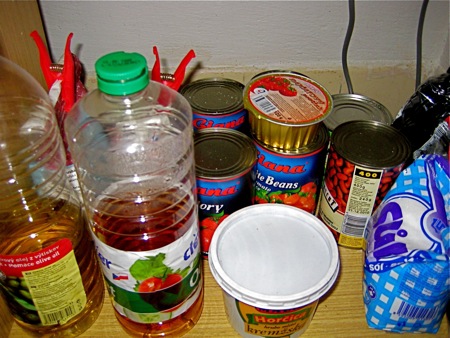
I photographed this recipe in Slovakia, so you'll notice a lot of incomprehensible words on my packaged products below. However, none of the ingredients I used are exclusive to Europe. I first published this on another blog I kept a year ago, but it's still m'm m'm good enough to share.

Though I was raised on canned soup, I've come to detest the stuff over the years. Can after can of mushy veggies, disintegrating noodles, and questionable meat, all soaked in a broth that tastes like nothing but liquefied salt, left me disappointed and disillusioned.

Today, soup is a frequent meal in our home, but with a key difference: It is always homemade. I cook up a big pot of the stuff, which provides a low-cal but filling dinner and then stretches to fill several lunches throughout the week.

Of course, the soup companies are always coming out with new varieties that sound enticing. So why not take a bit of inspiration from their product lines and create some soups truly worth supping on?

And so here it is -- the Soup Showdown!

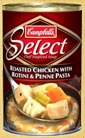
In one corner, we have a contender from Campbell's, the granddaddy of canned soup companies: Campbell's Select Roasted Chicken with Rotini & Penne Pasta Soup.

From Campbells.com:
A9CA6EBF-9614-47E4-A615-404327359696.jpgRoasted Chicken with Rotini & Penne Pasta Soup

A delightful twist on traditional chicken soup. Our chef created a memorable soup that is chock full of generous pieces of oven-roasted white-meat chicken, chunky-cut vegetables and a combination of whimsical pasta shapes, all simmered in a rich chicken broth aromatic with savory herbs that will soothe your soul and delight your taste buds!

Campbell's entrant offers a mere 100 calories per one cup serving, but watch out -- there's 860 mg of sodium in that same one cup! No wonder the stuff tastes so salty. And to think I used to eat almost the whole can at once.

Checking the ingredients, it's clear that this is your typical chicken noodle soup, albeit with pasta replacing the usual egg noodles. Chicken, celery, carrots, dehydrated onion, garlic, and herbs, broth, seasoning -- pretty simple stuff, and easy to improve upon.

Now, I wouldn't claim that my recipe for this is the ultimate version of chicken soup. I'm not simmering a whole chicken for hours or spending more to buy a bunch of herbs that will rot away in my crisper after I make the soup. I'm certainly not above using a few shortcuts, true, but I also need to think contextually. I'm limited by my time (which I don't want to spend all of in our kitchen), my grocery budget (which is small), and the availability of ingredients at normal grocery stores.

Still, following my guidelines here will definitely result in a soup that's fresher and tastier than anything you can get out of a can. It will take more time and effort upfront, but not any more than you would normally spend on cooking dinner. Plus, this recipe will make a huge batch that, when cooked as a dinner for two, will provide a quick-as-canned and satisfying lunch later on.

Let's get cooking!


I like nonstick spray for many reasons, but right now I'm mostly using it to save a handful of calories in everyday cooking. I coated the bottom of my soup pot with a quick spray before I turned the heat on to low.


Peel each carrot (or scrub them well, if you don't mind the nubbly outsides), trim off the yucky ends, and then cut them in half lengthwise so that you have a flat surface on the vegetable for nice, stable slicing. Next, chop them into half moons that are, oh, somewhere between 1/4 inch and 1/2 inch thick.


Drop all your carrots into the slowly heating pan as you chop them. They'll start to soften and get a little color as you chop the rest of the vegetables, but they won't burn as your heat here is very, very low.

Tip: If things do threaten to get smoky, just add maybe half a cup of water to the pot as needed to keep the veggies from turning to charcoal. A touch of oil to coat the veggies as they cook will also prevent burning, but you'll be adding calories.


I used a nice, big onion in my soup because I enjoy the sweet flavor of cooked onions. But like any of the ingredients, you can adjust the amount as needed to suit your taste. My chicken soup is kind of heavy on the vegetables because they are low-cal and nutritious filler.


Just dice the onion as small as you like. Cut off the tip of the onion, cut the whole thing in half top to bottom, then peel off the outer skin layer. Lay it flat and slice against the grain (but not through the root end -- you want to keep it together for now) to divide the onion into . . . columns. Yeah. And then slice crosswise to produce a dice. Don't worry, the layers come apart as you cook so you don't end up with enormous chunks.

Looks better than dehydrated onion, no? Dump all the chopped bits in the pot and stir.


Take four cleaned and trimmed celery stalks and . . .


. . . magically turn them into eight by slicing them in half lengthwise! Then chop 'em up and throw 'em in the pot.


Mmm . . . mirepoix.


Now I really like garlic, so I used five cloves. The soup doesn't get an overwhelming garlic flavor, but it does add good depth to the broth. If a bunch of little pieces of garlic floating around is going to disturb you, then just smash the cloves, pull off the skins, and dump them straight in without mincing. That way, you can easily pull them out at the end, once they've given their flavoring all.

But me?


I mince. Or sometimes use a garlic press.


Now that everybody's in the soon-to-be bath, I season with salt . . .


. . . and 1/2 teaspoon of pepper. Use less if you don't want it too spicy. Use more to really clear out that congestion.


Two cubes of this bouillon here make one liter of chicken broth, which is about four cups. Or, if you have chicken base in a jar, use four teaspoons for four cups. I add the chicken base directly to the pot and turn the heat up to medium high.


Next comes one cup of water . . . and a steam bath.


I now get aggressive and scrape up the fond from the bottom of the pan. That's all the browned bits stuck to the bottom that will help make your bouillon taste like real stock. Or your broth from a box, if you're not so cheap as me.


See what a nice, rich color the water is now? Go ahead and add three more cups of water.


Now, when it's all wet like that, I toss in the dried herbs. Dried herbs are fine for anything you plan on cooking for a while. Can you guess what these are?


One teaspoon of dried dill, 1 tablespoon of dried chives, and 2 bay leaves enter the pot. I love dill. Mmm.


Here is the diced chicken I saved from the previous night's stir fry. It's disturbingly similar in color to my hand. I only had one spare breast piece, so I cut it extra small to stretch it. You could always add more chicken if you're not cheap like me.


The chicken will start to turn white as soon as it hits the hot tub. Let it soak in there for about five minutes before you add the macaroni. It may need more time if you used bigger pieces.


We like whole-wheat pasta, but if you don't, well, I'll never know that you used a less virtuous noodle. The nutritional difference for pasta is relatively minor, and I have been known to buy the white stuff.


Add about 1/4-1/3 a pound of fusilli or whatever curly pasta you picked up.


I decided here that one liter of broth wasn't going to cut it for cooking all that pasta. I added two cups more water for the fusilli to drink up. You could use broth instead, but unless you use low-sodium, it will make the soup saltier.

Let the pot boil gently for as long as it takes for the macaroni to turn tender. Then . . .


. . . you'll have this lovely pot of soup here. Mmm!


M'm, m'm, good, you might say.

Chicken with Curly Pasta Soup
Source: Pennies & Pounds
Yield: 7 to 8 one-cup servings

  • Nonstick spray

  • 4 medium-sized carrots, peeled, halved lengthwise, and sliced

  • 1 large onion, diced

  • 4 stalks celery, halved lengthwise and sliced

  • 5 cloves garlic, minced

  • A few shakes of salt

  • ½ teaspoon ground black pepper (use less for less spice)

  • 4 cups chicken bouillon, prepared

  • 2 cups water

  • 1 teaspoon dried dill

  • 1 tablespoon dried chives

  • 2 bay leaves

  • 1 chicken breast, cut into a small dice

  • 125 grams fusilli (or other macaroni)


Put a large soup pot or Dutch oven over very low heat. Add the vegetables to the pot as you chop them, stirring with each addition.

Once all the veggies are in the tub, season them with some salt and the 1/2 teaspoon of pepper. Give the mix a good stir to distribute the seasonings, then turn up the heat to medium high. Add one cup of the bouillon and scrape the bottom of the pan firmly to bring up all the browned bits (this provides both depth of flavor and a cleaner pan for your significant other to wash!).

Add the rest of the bouillon and the water. To this, stir in the dill, chives, and bay leaves. Let the soup come up to a simmer, then add the chicken pieces. Allow the chicken to poach for about 5 minutes. Turn down the heat if the soup starts to boil rapidly.

Next, stir in the fusilli. Cook this at a gentle boil for as long as the package instructions say, until the pasta is tender. Fish out the bay leaves and serve.

Notes:
You can shift around the proportions as you see fit. This produces a very chunky soup. If you prefer a thinner soup, add another pint of chicken broth.

Download Chicken with Curly Pasta Soup into MacGourmet.

Food to Feed a Family of 20

67D9121F-DDCC-4A4C-8A6D-4395BF43BC4D.jpgHave you seen TLC's new "Family Night" show, 17 Kids and Counting?

I tried not to watch after catching an episode following Jon & Kate Plus 8 some Mondays ago, but the craziness has sucked me in. I don't necessarily seek the show out, but if it's on, I can't help but watch.

What makes this family so nutty? You may have guessed the chief reason: 17 kids, with more on the way! Come 2009, Michelle and Jim Bob Duggar will have a brood of 19, if you count their new daughter-in-law and the baby on the way. [Edit: Just born a few days ago; there's a special about it on tonight.]

Assuming you aren't familiar with the show and are now wondering how that happened, suffice it to say this is a strongly religious and conservative family. They homeschool; the girls wear long skirts; everyone wears extra-modest swimsuits; they don't kiss before marriage; and they watch little television (ironic, no?).

Much as their insistence that humans and dinosaurs co-existed makes a more progressive-minded person such as myself cringe, the open-minded way TLC produces the show and the humor and enthusiasm exhibited by the family members manages the seemingly impossible and makes this left-field clan relatable.

Watch the show sometime, and you're bound to notice how trim and healthy everyone in the Duggar family is. It's not necessarily good genes: Episodes featuring aunts, uncles, and cousins show the extended family comes in a variety of sizes. That tells me that people within the household must be instilling a message of exercise and healthy eating as well as praying and Bible reading.

The Duggars have posted a collection of their favorite recipes on their family web site (the address flashes onscreen during the opening credits for the show). Scroll past the directions for homemade cleaners to find the food.

The recipes feature ground turkey and turkey bacon rather than beef and pork. The pancakes feature whole-grain oats, and most of the dishes include vegetables or beans (cheap and healthy, remember?). There's definitely an emphasis on simple, homemade foods that can feed a score of people daily without overly straining the budget (less than $2,000 a month) or chaining the girls (yes, the girls) to the kitchen.

The downside is that the recipes feature a lot of traditional convenience ingredients (canned soup, Velveeta, Cool Whip), plus the mysterious Liquid Amino (basically a sauce that contains a variation on MSG). Still, with a family that size, you can't blame them not wanting to make everything from scratch.

There's a marathon of 17 Kids and Counting on TLC on Christmas Eve. Anyone up for some Tater Tot Casserole?

Photo: TLC.com

Low-Fat Oatmeal Applesauce Cookies

iced-oatmeal02.jpgFYI, for a tasty low-fat Christmas cookie recipe, check out today's post on The Cookie Book:

I will give Martha Stewart's folks credit for creating a decent oatmeal cookie so low in fat. This svelte Iced Oatmeal Applesauce Cookies recipe calls for a mere half stick of butter. As you might have guessed if you have familiarity with low-fat baking, the applesauce replaces the moisture lost to fat cutting, in addition to adding its subtle flavor.


A glass of milk, an oatmeal cookie - a classic, homey dessert!

The Easiest Ever Bean Patties: No More Pricey Frozen Veggie Burgers!

I wrote this for my old cooking blog, but I simply must share it again here. If you have never tried the recipe for bean burgers in How to Cook Everything Vegetarian, then you are missing out! They are simple to throw together (even in less than 30 minutes); they taste great; the recipe allows for endless variations; they're cheap; and being bean- and oat-based, they're scandalously healthy. You can eat them on bread as burgers, or you can serve them like I generally do, as a substitute for a meat cutlet right on the plate.

Garbanzos make for the best patties in my experience. If you use other beans, be especially careful about the amount of moisture in the mix, adding more oats if necessary to firm it up.

Oh, and as it's just about holiday time, I thought you'd appreciate a glimpse into Slovak holiday traditions. St. Nicholas Day, when presents are exchanged, is past, but the carp is yet to come. I wrote this on New Year's Eve, Dec. 31, 2007.


Meat is a difficult proposition here in Slovakia. Well, at least for me.

The Slovaks are a pork-loving people. I am decidedly anti-pork (with the exception of bacon and occasionally sausage). The Slovaks also are fond of many meats that are uncommon in American supermarkets, such as goose, venison, and duck. I just can't face any new meats.

Not to mention the tradition here of buying a live carp for Christmas dinner, keeping it alive in the bathtub until that fateful supper. Thank goodness those vendors are gone for the year.

Anyway, this long-winded dissection of foreign culinary habits is meant only as a justification for my looking into ways to create protein-packed main dishes without resorting to cultivating a taste for pigeon.

For everyone not living abroad, bean burgers are still a great idea for everyday dinners as they are high in fiber as well as protein and, oh yeah, they're cheap. Even if you do find chicken or ground beef for $3 a pound on sale, it doesn't beat a can of beans at about $0.50 to $1 [more like $1-plus these days, but now, with my slow cooker handy, I can opt for a whole pound dried for $1.50 - Ed.].

I found this recipe on the site promoting Mark Bittman's How to Cook Everything series of cookbooks. Specifically, it comes from the new book, How to Cook Everything Vegetarian, which was on my wish list for this Christmas.

I had an extra can of chickpeas in the cupboard from a side dish I forgot to make, so that became the base for our patties. Because this was the first time I was trying this recipe, I didn't go with any of the suggested variations such as adding cheese (I've made veggie patties from scratch only once in my life, and the result was nearly disastrous).

On the other hand, I didn't have any cheese to add. In fact, after I'd already started adding things to the mixing bowl, I realized that I did not have an egg, either. I'd used the last ones the night before to make French toast, forgetting I was supposed to reserve one. Oops.

I ended up adding a tablespoon of mayonnaise to the mix, figuring that at least that spread contains egg. Bittman does suggest some vegan alternatives for binding, but it seemed odd to add another half-cup of oatmeal and too much trouble to make mashed potatoes or rice from scratch just for this recipe. The mayo turned out to work just fine as a binder, fortunately.

I also had to vary the recipe slightly as far as the method went. I don't have a blender or food processor here, so instead I chopped the onion as finely as I could and then had at the mixture with our potato masher. It took a good bit longer than the food processor would have, but with enough effort it became a uniform mush.

The patties we ended up with perhaps could have used some more seasoning, but we enjoyed them with sauces that provided the extra kick. Scott spread his with ketchup and whole-grain mustard, whereas I dipped mine in tartar sauce as if I were eating vypražaný syr (fried cheese). We ate them without buns or bread this time, but they are solid enough to be used as hamburger substitutes.

I'm going to try making some with kidney beans soon. And this time, I'm so going to remember the egg.

The Simplest Bean Burger
Source: Mark Bittman, How to Cook Everything Vegetarian
Yield: 4 to 6 patties

  • 2 cups well-cooked white, black, or red beans or chickpeas or lentils, or one 14-ounce can, drained (I used chickpeas/garbanzo beans.)

  • 1 medium onion, quartered (I used half a large onion, chopped fine.)

  • ½ cup rolled oats (preferably not instant)

  • 1 tablespoon chili powder or spice mix of your choice (I used taco seasoning.)

  • Salt and freshly ground black pepper

  • 1 egg (I used one tablespoon of light mayonnaise.)

  • Bean-cooking liquid, stock, or other liquid (wine, cream, milk, water, ketchup, etc.) if necessary (I added a little water.)

  • Extra virgin olive oil or neutral oil, like grapeseed or corn, as needed (I used nonstick olive-oil spray.)


1. Combine the beans, onion, oats, chili powder, salt, pepper, and egg in a food processor and pulse until chunky but not puréed, adding a little liquid if necessary (this is unlikely but not impossible) to produce a moist but not wet mixture. Let the mixture rest for a few minutes if time allows.

2. With wet hands, shape into whatever size patties you want and again let rest for a few minutes if time allows. (You can make the burger mixture or even shape the burgers up to a day or so in advance. Just cover tightly and refrigerate, then bring everything back to room temperature before cooking.) Film the bottom of a large nonstick or well-seasoned cast-iron skillet with oil and turn the heat to medium. A minute later, add the patties. Cook until nicely browned on one side, about 5 minutes; turn carefully and cook on the other side until firm and browned.

3. Serve on buns with the usual burger fixings. Or cool and refrigerate or freeze for later use.

Notes:
Simplest Vegan Bean Burger. Many options: Omit the egg, obviously. Add 1/2 cup Mashed Potatoes; or 1/2 cup cooked oatmeal or short-grain rice (white or brown); or 1/4 cup miso or 1/2 cup tofu.

Bean-and-Cheese Burger. As a flavor-adder, cheese can't be beat, plus there are two bonuses: You don't have to mess with melting cheese on top of the burger, and-for the most part-it acts as a binder. Add 1/2 to 1 cup grated Parmesan, cheddar, Swiss, Jack, mozzarella, or other cheese to the mix (you can omit the egg if you like).

Bean-and-Spinach Burger. Of all the veggies you can add to a burger, I like spinach. You can leave it uncooked and just shred it if you prefer (figure about 2 cups), but this gives better results; it's great with a little garlic added: Squeeze dry and chop about 1 cup cooked spinach (you'll need about 8 ounces of raw spinach to start, or you can use frozen spinach); add it to the mix and proceed with the recipe.

Bean-and-Veggie Burger. Many options, but don't overdo it or the burger will fall apart: Add up to 1/2 cup carrots, bell peppers, shallots, leeks, celery, potato, sweet potato, winter squash, zucchini, or a combination. Cut into chunks as you do the onion and grind with the beans or shred or mince and add afterward.

High-Protein Bean Burger. The soy gives it just a little boost: Instead of rolled oats, use rolled soy (soy flakes).

13 Ways to Build Delicious Veggie Burgers

There are more ways to vary the burgers in this section than I can imagine, but here are a few ideas. The basic rules are to make sure the mixture is neither too dry nor too wet (if you find yourself in the first situation, add a liquid ingredient; in the second, add some oats, ground rice powder or flour, cornmeal, flour, bread crumbs, or the like). But as for flavors, the sky's the limit.

1. Fresh herbs. You can almost not go wrong with fresh herbs, as long as you don't use overwhelming amounts. Add up to 1/2 cup parsley, basil, or dill leaves; somewhat less of mint, cilantro, or chervil; a tablespoon of oregano or marjoram; or only a teaspoon or so of fresh thyme, tarragon, or rosemary.

2. Dried herbs. Use by the pinch; to really get the seasoning right, taste and adjust it (you can cook a little bit first if you don't want to taste it raw).

3. Spices. The spice mix-chili or curry powder, for example-is an easy way to go, but you can combine fairly small amounts (usually 1/4 to 1/2 teaspoon) of various spices as you like. Try, for example, smoked paprika, cumin, and ground chiles; coriander, cumin, ginger, and cardamom; or anything else that appeals to you.

4. Garlic. Can't go wrong, really. Add 1 teaspoon or more minced garlic to the mix, or a tablespoon or more Roasted Garlic, with a little of its oil.

5. Chiles. For heat, you can simply add cayenne, hot red pepper flakes, or the like. But if you want some texture, you might include 1/4 cup or more roasted (or canned) green or red chiles.

6. Soy sauce or miso. Just a tablespoon or so of soy sauce, but up to 1/4 cup of any miso; you can omit the egg if you like.

7. Ketchup, salsa, or mustard. Up to 1/3 cup of ketchup or salsa (both of which are pretty good); 1 tablespoon or so of Dijon or other mustard.

8. Nuts or seeds. The nice thing about nuts is the crunch. Add 1/4 cup or so of sesame or sunflower seeds and up to 1/2 cup nuts or pumpkin seeds toward the end of the processing so they don't become too powdery.

9. Lemon, lime, or orange zest. The slight acidity brightens the taste.

10. Tomato paste. A tablespoon or two will give the burgers nice color and a more complex flavor.

11. Mushrooms. Add a tablespoon or so of dried mushrooms, soaked and cooked, as you would any other vegetable (see number 12). Or use up to about 1/2 cup raw, trimmed and added along with the oats and beans.

12. Cooked veggies. Milder flavor, softer texture than raw veggies: Add up to a cup of cooked vegetables- onions, greens, broccoli, potatoes, sweet potatoes, winter squash, zucchini-whatever you like. If you use potatoes and add them to the food processor along with the beans, you can omit the egg and oats.

13. Cooked grains. All-grain burgers tend to be mushy and uninteresting, but adding a bit of grains to other burgers results in a terrific light texture. Feel free to add up to a cup of cooked grains, along with the beans. Omit the oats and, if you like, the egg.

Holiday Dinner Planner

dinner-party-planner.gif

Yes, it's still early in the month of December, but if you want your holidays to be fun rather than harried, now is the time to get your big party meal planning out of the way.

I've created a template for planning a big holiday meal, potluck-style. You have space to fill in who is bringing what dish, as well as the name of the dish if you choose. The template provides dish categories to guide you and help you plan a well-rounded meal.

That is, a meal which doesn't end up featuring five kinds of potatoes alongside the baked ham.

Download the planners for yourself!

Dinner Party Planer PDF
Dinner Party Planner for Apple Pages (in ZIP file)

Economical Holiday Dinner Plans

The Well blog has an extensive roundup of links to articles offering tips for planning a festive holiday meal without busting your budget:

Holiday Feasting on a Budget - Well Blog - NYTimes.com: “The budget-conscious dinner party is getting a lot of attention these days as home cooks search for affordable foods to serve holiday guests.

The Boston Globe offers a particularly interesting meal for less than $8.50 a person. Health-conscious revelers will like the gingered mashed sweet potatoes and the interesting cabbage and pomegranate slaw. The glazed braised pork shoulder looks delicious and will be a hit with low-carb eaters.”


Check the original out for more. We'll be making our own Christmas dinner more economical through making the main meal mostly a potluck (how else could you feed more than 30 people?!).

I'm also selecting recipes for my holiday cookie extravaganza based on how exotic and expensive their ingredients are. This year, I'm leaving nut-based cookies off Mrs. Claus' list, and I drew the line at two extracts beyond what was already in the pantry. Altogether, I've spent $20 (on top of what was in the pantry anyway) for ingredients enough to make 10 cookie recipes using this method, leaving me more for spending on presents.

Homemade Light Paprika Vinaigrette Recipe

I have to apologize for focusing so much on healthy recipes lately, but food is about all I think about in the run-up to the holidays!

I threw together this vinaigrette back when I made the Italian dip for our election-night party. I ended up making two batches as I spilled half the first batch all over the kitchen counter (that was fun), so we had homemade vinaigrette in the fridge for the next week.

And surprise of surprises, it went fast. Even my "I'll take Italian, please," brother elected to put some on his salad. How's that for an endorsement?

I made the vinaigrette using a stick blender and the beaker that came with it, but naturally it would come together just as well in a regular blender.

Keep in mind also that the more raw garlic you add, the more pungent it will become. It also gets more pungent over time, so keep that in mind when you taste the freshly blended dressing.

Light Paprika Vinaigrette
Source: Pennies & Pounds
Yield: about 1 to 1¼ cups of dressing, about 10 servings

½ cup apple cider vinegar
¼ cup water
2 teaspoons Dijon mustard
2 teaspoons mayonnaise
1 tablespoon sugar
2 teaspoons dried parsley (or 2 tablespoons fresh parsley)
1 teaspoon dried dill (or 1 tablespoon fresh dill)
1 tablespoon paprika
½ teaspoon celery salt
½ teaspoon Lawry's seasoned salt
Freshly ground black pepper
1 or 2 cloves garlic, crushed
¼ medium onion, chopped
¼ cup vegetable oil

1. Put all ingredients except the garlic, onion, and oil in the beaker or pitcher of your blending unit. Pulse to combine.

2. Add the garlic and onion. Purée the veggies into the vinaigrette.

3. Add the oil and let 'er rip. You'll end up with a lovely red emulsion. Enjoy on salad or mixed into your favorite recipe.

Approximate Nutrition Facts (2 tablespoons): Calories: 66; Total Fat: 6.05g; Total Carbs: 2.20g; Dietary Fiber: 0.38g; Sugars: 1.47g; Protein: 0.23g

Roasted Vegetable Sandwich Spread

sandwich-spread.jpg

I despise cold cuts.

There, it's out. Hungry Girl may adore them, and may recommend the salt bomb of a slice of turkey wrapped around a pickle as a good low-cal snack, but I cannot stand the slimy sheets.

I do eat dried, cured sausages such as pepperoni and salami, which are often lumped in with cold cuts, and on occasion you can get me to eat a sandwich made with some sort of cold beef, but for the most part, I would rather choke down a quart of boiled cabbage.

Thus, I have to get creative with sandwich fillings. While I enjoy chicken salad, egg salad, BLT, and grilled cheese sandwiches, I can't eat them every day: One, I need variety, and two, well, they're awfully rich. I like egg sandwiches (whole or whites only, with light cheese), too, but they require prep time I'm often not willing to give at lunch time.

Now that I have oven access and a renewed appreciation for vegetables, I decided to finally try out Alton Brown's recipe for roasted vegetable sandwich spread.

Yum. Numnumnum yummmm!

I've altered the recipe each time I've made it. You can throw in just about any vegetable you like, and when you purée them in the food processor with a block of light cream cheese, you'll end up with a delicious, slightly sweet yet savory spread.

I go heavy on the vegetables, which doesn't negatively affect the texture but does make the spread calorically lighter and more nutritious.

By the way, don't confuse this with vegetable-flavored cream cheese they sell in tubs at the supermarket and bagel shop. This spread has way more flavor and nutritious goodness.

sandwich-spread.jpgRoasted Vegetable Spread
Source: Adapted from Alton Brown

2 red bell peppers, sliced
1 medium-to-large onion, cut into chunks
8 cloves garlic, peeled
2 carrots, cut into chunks
1 tablespoon oil
8 ounces light cream cheese or neufchatel cheese
Salt
Pepper

1. Toss the vegetables with the oil. Roast at 400 degrees in a toaster oven or regular oven until the vegetables turn soft and brown at the edges, about 45 minutes. Allow the vegetables to cool.

2. Pulse the cooled vegetables with some salt and pepper in a food processor. Scrape down the sides of the bowl and add the cream cheese. Run the processor until you produce a smooth purée. Taste and adjust the seasonings, if necessary.

3. To serve, spread on toasted soft sandwich bread. Lick fingers. Enjoy.

Technorati Tags:
, , , ,

A Healthier Appetizer for the Holidays: Italian Dip

italian-dip.jpg

Yesterday's air of excitement as the election results rolled in put me in a holiday mood. The anticipation throughout the day, and the literal dancing in the streets after the final polls closed made the atmosphere as electric as when Santa's sleigh is soaring through the sky.

We prepared a little election-viewing party here in our apartment, which meant lots of beer and cocktails and plentiful munchies. I baked two sheet-pan pizzas for dinner (I've finally just about perfected pizza crust), whipped up a batch of hummus with veggie dippers, and of course, I made what has become one of my go-to party foods, Italian dip.

My mother-in-law first introduced me to this salsa-like mix of cheese and veggies. When I make it, I follow her tips for success but invariably mess around trying to achieve hors d'oeuvre perfection.

We've both tweaked the recipe from the original, which called for a lot more cheese. I usually make my own low-fat vinaigrette to pour in rather than mixing up a batch of Good Seasons Italian, and sometimes, if I have the cash, I replace the canned chopped olives with kalamata olives.

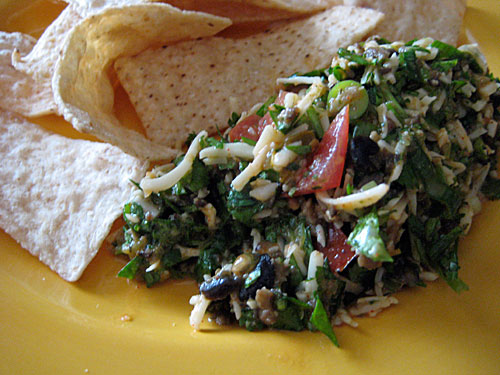
FF844616-61FB-451A-8403-CD3EB4CF1341.jpgThe name is not particularly descriptive of the results, so feel free to call this cilantro-based concoction whatever you prefer. Cilantro, after all, is an herb found more commonly in Mexican and Asian cuisine. Though Italian markets might carry "coriander" (as it's more commonly known in Europe and what we here call the seed cilantro grows from), it doesn't make frequent appearances in that culture's dishes compared to other herbs such as basil or flat-leaf parsley.

As this recipe features cilantro prominently, I'm sharing it with the Weekend Herb Blogging community. I once participated in this even on my old cooking blog (which is only updated infrequently since I reassessed my writing direction), but it has changed since then. Starting this week, the event is organized on the site Cook (almost) Anything at Least Once, which you can visit to learn more about the event. This week's roundup is hosted by Noob Cook, if you're interested in more vegetation-based recipes.

I know cilantro can be a controversial herb. A loud faction insists that it tastes like soap and ruins whatever food it touches. Some contend that dislike of cilantro is genetic, but I'm not sure that there's much solid evidence to back up this claim (though science has examined the herb's apparent antibacterial properties). I didn't like cilantro when I first tried it myself, but after multiple exposures I grew to appreciate its fresh, verdant flavor.

Obviously I'm not the only person to adore cilantro in our household, as just yesterday I wrote about my cilantro-based pesto. Cilantro, like parsley, is ubiquitous in supermarkets and available in cheap, non-clamshelled bundles for less than a dollar each. It's as flavorful as basil (though differently so) for no more than a third of the price, which makes it both healthy and budget-friendly.

Give Italian dip a try at your next shindig. Use it like we tend to (having picked up the recipe in California) by scooping it up with tortilla chips, or consider alternate applications. It could be a topping for small rounds of toast (think bruschetta) or a filling for a pita. Some people even eat it straight up like a salad.

whb-italian-dip.jpgItalian Dip
Source: Pennies & Pounds

2 bunches cilantro, chopped
2 bunches green onion, chopped
4 plum tomatoes, diced
1/2 lb. fancy-shred mild white cheese (I used mozzarella, but my mother-in-law uses Monterey Jack)
1 4-ounce can diced green chilies
1 4-ounce can chopped black olives (or an equivalent amount of chopped kalamata olives, about 1/4-1/3 cup)
1 cup your favorite vinaigrette (or 1 package Good Seasons Italian dressing mix, prepared)

Toss the veggies and cheese. Mix in the dressing gently. Allow the dip to rest in the refrigerator a few hours before serving for the flavors to meld, but the dip tastes best served at room temperature so bring it out early.

Technorati Tags:
, ,

$7 Dinner Challenge: Pesto Pasta with Sausage

pesto-pasta.jpg

Inexpensive cooking has hit the web like yellow mustard splats a hot dog.

It's everywhere.

I started this web site a few months ago now, back when "bailout" might have meant those $1,200 checks families got in the mail rather than $700 billion to heal corporate America's boo-boo. I'd been feeling the pinch more from having lived on a dollar salary in a euro world, but now the idea of writing about cheap eating seems prescient. I caught the wave early.

Anyway, I decided to give the $7 Dinner Challenge as outlined on Sweetnicks a try, figuring it fit well with my efforts to write about healthy, frugal eating and with my efforts to keep our own grocery budget in line as food costs refuse to drop along with the price of gas.

We have a three-person household here in Seattle, with me, my husband, and my brother (also a grad student). Last month, we spent about $15 a day on groceries, which certainly isn't bad, but it would be helpful if we could do better. However, we draw a line when it comes to food quality; we won't subsist on ramen just to make ends meet.

Thus, I write posts like this one to show that you can live on the cheap without eating ramen or double cheeseburgers every night. The meal we had on Sunday, pesto pasta with smoked sausage and salad, cost only about $2.27 a person (for three people -- if you had four eaters, it's $1.71).

Give the method a try! You could make it even less expensive by using pre-grated parmesan cheese, regular pasta, and plain old vegetable oil, too. It would still be a healthy meal (albeit with a little less fiber), full of heart-friendly fats and pretty lean protein.

pesto-pasta.jpgPesto Pasta with Smoked Sausage
Source: Pennies & Pounds
Yield: 4 servings (unless you're serving hungry guys . . . then maybe only 3!)

1 pound pasta
2 tablespoons almonds (approximately)
4 cloves garlic
1 bunch cilantro
salt and pepper
1/4 c. olive oil
Reserved pasta cooking water
1/4 c. grated pecorino romano
1 pound turkey smoked sausage or kielbasa

1. Set a large pot of water on the stove to boil. Salt the water generously and add the pasta when it's ready. Cook the pasta until it's al dente. (I usually set a timer for 7 minutes.) Make the rest of the recipe while the water comes to temperature and the pasta cooks.

2. Grind the almonds and garlic in a food processor. Add the cilantro and pulse until it's chopped. Add a pinch of salt and some black pepper. With the processor on, drizzle in the olive oil through the feed tube. It won't look too saucy yet. Take a break from the sauce until you drop the pasta.

3. Slice the sausage into rounds and cook it over medium-high heat until it is nicely browned. Keep it warm over low heat until tossing time.

4. After you've put in the pasta and let it cook a couple minutes, scoop some starchy water out of the pot with a measuring cup. Turn the food processor back on and gently pour in the hot water until the pesto looks nice and loose. Remember, it will thicken a bit more when you stir in the cheese. Pour the sauce into a large tossing bowl and stir in the pecorino.

5. Add the hot pasta to the bowl and toss with the sauce. Add more pasta water if it looks too dry for your taste. Add the seared sausage and serve.

Cost breakdown (your prices may vary):
Pesto pasta with smoked sausage:
500 g whole-wheat pasta: $1.32
1 pound turkey smoked sausage: $2.00
25 g almonds: $0.25
1 bunch cilantro: $0.69
1/4 c. pecorino (.8 oz): $0.39
4 garlic cloves: $0.08
1/4 c. extra-virgin olive oil: $1.02
kosher salt
fresh-ground black pepper

and a salad of:
1/2 head iceberg lettuce: $0.40
1/2 cucumber: $0.40
2 plum tomatoes: $0.27

Total: $6.82

Hungarian Meatball Stew

Welcome to Pennies & Pounds! I post meal-planning tips here regularly, along with other daily content about healthy, budget-minded eating. Subscribe to our RSS feed or our daily e-mail updates to be notified about new posts that might interest you!


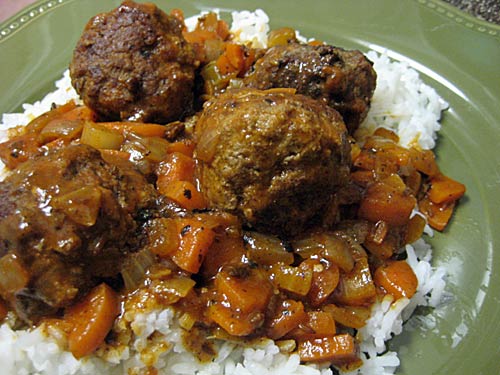
hungarian-meatball-stew03.jpg

When I returned from my year in Europe, I had a huge stack of magazines waiting for my perusal in California. Most were issues of Everyday Food, which I seemed to have received the entire time I was away, but I had a handful of Every Day with Rachael Ray in the big crate as well.

In the September 2007 issue, I found an article that eerily anticipated our current financial downturn (though we certainly were feeling last year, as we bemoaned our rapidly diminishing buying power in a euro-centered economy). "Beef Up" featured recipes made with ground beef, a staple that's easy to buy in bulk for less to stock the freezer.

I followed the recipe pretty closely. I substituted chicken broth for the beef broth because it's what I keep on hand, a reasoning I'm certain Rachael herself would never frown on. I also used fresh, whole-wheat bread crumbs I had in the freezer from a bread-baking debacle, but the recipe doesn't specify the kind of crumbs to use.

Finally, I elected to serve the stew over rice rather than the suggested buttered noodles. Having lived for nine months in Slovakia (formerly united with Hungary) and having visited Budapest for a couple of days, I believe rice to be the more authentic choice over American-style curly egg noodles.

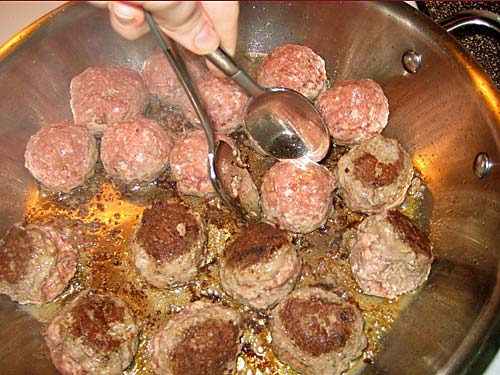
I browned the meatballs all at once in my huge everyday pan, using two spoons to turn them as they browned. The spoons are great for levering up meatballs stuck to the pan and gently flipping them without breakage.

hungarian-meatball-stew01.jpg

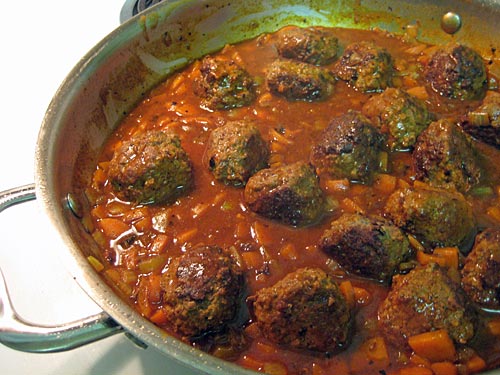
The gravy thickened quickly. The burnished color of the paprika made the silky sauce look absolutely . . . camera-ready.

hungarian-meatball-stew02.jpg

The aroma of rye bread filled the air as the stew simmered for the last few minutes. Caraway is strong stuff.

Alas, though I used two whole tablespoons of paprika straight from Hungary, I wasn't sold on this recipe. The meatballs were beefy, but they felt dry and could have used seasoning beyond salt and pepper. If I made them again, I would add paprika as well as my usual meatball mix-in, a grated onion.

Neither addition would make the recipe much more expensive, either. The biggest expense here is the ground beef, which cost me maybe $4. Everything else, including the salad I served on the side, cost only a few bucks more total. If you don't have caraway seeds and can't find that on the cheap, I don't think leaving it out would be such a tragedy.

Here's the recipe, with my notes in [brackets].

hungarian-meatball-stew03.jpgHungarian Meatball Stew
Source: Every Day with Rachael Ray, September 2007
Makes: 4 servings

Ingredients

1 1/2 pounds ground beef [I used 88-percent lean beef - a decent compromise among texture, calories, and price.]
1/2 cup bread crumbs [I used fresh whole-wheat crumbs.]
1 large egg
Salt and pepper
2 tablespoons extra-virgin olive oil
2 carrots, chopped
1 small onion, chopped [I used half of a large one.]
1 rib celery, chopped
2 tablespoons flour
2 tablespoons sweet paprika
2 cups beef broth [I used chicken broth because I'm inauthentic like that sometimes.]
1 tablespoon caraway seeds

1. In a large bowl, combine the beef, bread crumbs, egg, 1 teaspoon salt and 1/4 teaspoon pepper. Mix well and form into 1 1/2-inch meatballs.

2. In a large skillet, heat the olive oil over medium-high heat. Working in 2 batches, add the meatballs and cook, shaking the skillet often, until lightly browned, 5 to 7 minutes. Transfer to paper towels to drain.

3. Pour off all but 1 tablespoon of the fat in the skillet and add the carrots, onion and celery. Cook, stirring constantly, until softened, about 3 minutes. Stir in the flour and paprika and cook for 1 minute. Pour in the beef broth and bring to a boil over high heat, scraping up any browned bits from the bottom of the pan; season to taste with salt and pepper. Add the reserved meatballs and caraway seeds, reduce the heat to medium-low and simmer for 5 minutes.

CHILL: Cover and refrigerate for up to 3 days.
REHEAT: Warm the stew over medium heat.

FREEZE: Pour into a large freezer bag, press the meatballs into a single layer and lay the bag flat on a baking sheet. Freeze for up to 4 months.
REHEAT: Defrost in the refrigerator overnight or submerge the bag in cold water for 2 hours, changing the water every 1/2 hour. Pour the stew into a pot and warm over medium heat.

Meal Planning Basics: Pantry Planning Guidelines

prague-pantry.jpg

I've gone on about pantries for three weeks now, and they've been my obsession for much longer as I've had to set up three in the past year or so. Here are a few basic guidelines to get you started on your own pantry-planning quest:

1. Reflect on what you cook, bake, and eat.

Hopefully, you have a meal planner squirreled away from your previous abode that you can page through to see what kinds of dishes you regularly cook. If not, simply make a list of what's in your regular rotation, to the best of your memory.

I know that I cook pasta dishes with tomato-based, oil-based, and milk-based sauces frequently. I also make variations on chicken and rice often, as it's my husband's favorite. In addition, I like to cook meatballs, meatloaves, and hamburgers. I enjoy baking of all sorts as well. Finally, I know that cereal and oats are popular breakfasts and that eggs and sandwiches make frequent lunch appearances.

2. Make a list of the basic components of your "usuals."

This step is not so hard. If you know from the first step that you eat spaghetti with meatballs once a week, put spaghetti, ground beef, and either sauce or the basic sauce components (tomatoes, garlic, and onions) on your list.

If you bake, don't forget to list those staples, too: yeast if you make a lot of bread, baking powder, baking soda, and so forth.

3. Add the essentials used across all sorts of cooking.

Think oil (I like a neutral one for baking and frying and cold-pressed olive oil for everyday cooking), a basic vinegar, salt, pepper, butter, nonstick spray, and so on. Also, even if you're not a baker, pick up at least a little all-purpose flour and white sugar for thickening and seasoning, respectively.

Don't go overboard and buy every sauce known to Asia and twenty kinds of olives. You can buy capers or canned green chiles later, when you actually have a recipe planned that calls for them. Here, we're just looking for the items that you can't cook most meals without.

Spices can be the real money sink at this point. It's hard to anticipate every spice you will need. When I lived in Slovakia and the Czech Republic, I bought small packets for about a 25 to 75 cents a pop whenever I needed them and gradually built up a stock that way. Here, I'm lucky to find jars of the basics for $1 each.

I say, if you know you don't use spices much, then buy the handful you reach for frequently (perhaps salt, pepper, a seasoning blend, dried oregano or thyme, garlic powder, and cinnamon) and wait on the rest until the need arises. If you don't want to feel limited when the spark of creativity strikes over a pot of chili, then consider buying a pre-stocked spice rack from the housewares store to save money.

4. Buy just the essentials to get started.

You have a full pantry list, but don't go crazy shopping yet! Stick to your all-meals essentials list from step three. Add on food items you'll need to follow your meal plan for the week (including breakfast and lunch staples), and then proceed to step five.

5. Check the store circulars.

You have your lists, so now start checking for deals. When your store has chicken breasts on sale, buy as many as you can keep frozen. If Costco offers a fabulous deal on pasta, scoop up a bunch of bags for the cupboard.

The idea here is to build your pantry stock over time as the best prices arrive. After your first disorganized move-in week, you can start planning meals based on the circulars and the supply of staples (step 2's list) you stocked up on when you found them at a rock-bottom price.

For example, perhaps your store is selling sausage for $2 a pound. Your family loves sausage and eats it every week, so you buy six pounds for your pantry. You also pick up a 5-pound bag of rice on sale, and back home, you have a freezer stocked with last week's $2.50 a pound lean ground beef.

Now you can use your stock to your budgetary advantage. When you shop, you'll only need to purchase specific, one-off items (say, pimentos), fresh produce (lettuce, for example), and whatever of your staples are on sale. You won't have to buy new chicken every week to meet your recipe needs, and thus you won't have to suffer through paying $4 a pound for it one week when it was only $2 the week before.

6. Find a warehouse or outlet store to use as a backup.

Even the best-laid plans can fall through. Coupons and supermarket loss leaders can net you the best deals, but sometimes you run out of spaghetti at an inopportune time. Check your local area for discounters.

You might already have a Sam's Club or Costco membership. While they don't always beat an advertised sale at your local market, they often have the best everyday price for an item. If you have Smart & Final in your area, you won't even have to pay a membership fee to take advantage.

If you're not a bulk warehouse sort, try looking for grocery outlets or private-label stores like Aldi. In my experience, the prices are also lower than usual at Wal-Mart's grocery stores and Fred Meyer, both of which don't require you to have a special "shopper's club" card to take advantage of discounts.

7. Put your pantry to use!

Lucky number seven is just a reminder that there's no point in stocking something in your pantry if you don't plan your cooking around it. Don't let your food sit idle!

If you find after a while that you are getting backlogged with certain items -- say, you buy a ton of cream soup on sale but don't end up making a lot of casseroles -- re-evaluate your staples list for your current style of cooking.

This list is my new pantry plan. I'm working the system successfully so far. While I know there's another move sometime in our relatively near future, I now feel prepared to face another new kitchen with confidence.

Other Pennies & Pounds articles about meal-planning basics:


Photo: Colleen Fischer

Technorati Tags:
, , , ,

Building My Pantry

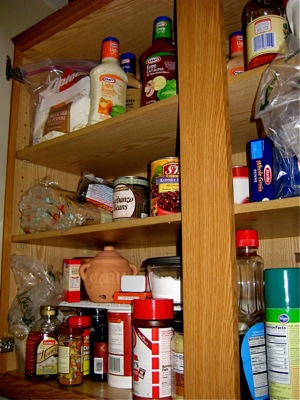
pantry.jpgI unleashed a rant against pantries last week, but despite my negative view, I know that a pantry of some sort is a kitchen necessity. If you feel grumpy about my extremist pantry perspective after last week, I'm here now to soothe your tender feelings with my own cupboards' tale.

It took me a couple of weeks to get my pantry system nailed down, to be honest. I'm out of practice. My pantry in Europe was practically nonexistent, especially during my time in Prague, as the space for it was limited by the number of cans I could stack on the kitchen floor without tripping. Having a whole two cupboards, plus a full-sized fridge and freezer, seems like the height of luxury now.

I started out shopping with the idea that I would only buy items I knew I would cook with in the coming week, plus anything I use regularly that I noticed was on sale for a great price. It worked out OK; I ended up with just enough to get by with for a week, plus a bunch of whole-wheat pasta for $1.50 a box.

It became a little trickier when I started visiting Costco. Except for a few fresh items, such as bananas and lettuce, nothing you buy at Costco will conceivably need to be replaced within a week. It's a place where it's easy to go overboard with pantry stocking.

On my first trip, I grabbed only fresh items and perishable lunch fixings, both categories I knew would not lead me astray. I knew I would want to start buying other items there regularly, but I felt unsure of whether the space cost would be worth the price savings.

I came back armed with a pocket notebook to make a price list. It took a couple of hours, sure, but now when I go to my regular grocery store, I know what to pass on and buy at Costco instead.

I proceeded to stock up on food that I knew for sure I would use every week and thus go through well before it expired, such as whole-wheat pasta (the price at Costco is terrific), light yogurt, and meats.

In the end, I did pretty well on stocking up. I've been "shopping" my freezer and cupboards for very basic meats and dry goods that I bought in bulk or on sale now for about a month. I don't have a wide variety of food on hand because I plan each week on going to the store.

Right now, if you checked my kitchen, you'd find a good stock of items we eat every week here: ground beef, poultry sausage, chicken breasts, whole-wheat flour, and brown rice in the freezer; pasta, canned tomatoes, beans, white flour, and sugars in the pantry.

One area I neglected to plan well for is condiments and spices. I wouldn't realize until I started planning to make a recipe that I didn't have, say, Worcestershire sauce or almond extract on hand. Since we end up using condiments and seasonings like soy sauce in non-"recipe" applications regularly, I should have taken the time to really think through how I hit up my spice pantry day to day.

Next week, I'll dissect what I learned from this pantry-building experience and provide a few general suggestions to help you plan your own pantry.

Photo: Colleen Fischer

Technorati Tags:
, ,

sp